No products in the cart.
Festivals of Himachal Pradesh: A Complete Cultural Guide to Devbhoomi’s Sacred Celebrations

Himachal Pradesh, nestled in the lap of the mighty Himalayas, is not just a land of snow-capped peaks, rivers, and forests—it is a living museum of ancient traditions, faith, and celebrations. Often referred to as Devbhoomi (Land of Gods), Himachal Pradesh is home to hundreds of deities, each with their own stories, rituals, and festivals.
Festivals of Himachal Pradesh are deeply rooted in religion, agriculture, seasons, and community life. Unlike urban celebrations that last for a day or two, many Himachali festivals extend over several days and involve entire villages. These festivals are not mere events; they are expressions of devotion, gratitude, social unity, and cultural identity.
Introduction to Festivals of Himachal Pradesh
Festivals in Himachal Pradesh are not just dates on a calendar—they are living expressions of faith, nature, and community life. In this Himalayan state, festivals are deeply interwoven with mountains, seasons, agriculture, and the spiritual world. Every village, valley, and region has its own unique celebrations, shaped by geography, climate, and centuries-old beliefs.
Unlike urban festivals that are often event-based, Himachali festivals are process-based. They unfold over days or even weeks and involve rituals, collective decision-making, folk performances, community feasts, and the symbolic presence of local deities. These celebrations strengthen social bonds and preserve traditions passed orally from one generation to another.
To truly understand Himachal Pradesh, one must understand its festivals—because they reflect how people here live with nature, respect divine forces, and maintain harmony within society.
Meaning of Festivals in Hill Culture
In hill culture, festivals are a necessity of life, not a luxury. Life in the Himalayas has historically been challenging due to harsh winters, difficult terrain, and limited resources. Festivals emerged as moments of collective relief, gratitude, and hope.
1. Festivals as Community Bonding
In remote hill villages, festivals serve as:
- Social gatherings after months of isolation
- Platforms for resolving disputes under divine witness
- Opportunities for inter-village interaction
Everyone participates—men, women, elders, and children—creating a strong sense of unity.
festivals-of-himachal-pradesh
2. Festivals and Nature
festivals-of-himachal-pradesh
Hill festivals are closely aligned with:
- Seasonal changes
- Agricultural cycles (sowing, harvesting)
- Weather patterns (snowfall, monsoon, spring bloom)
Celebrations like Lohri, Baisakhi, Minjar, and Phulaich are rooted in gratitude toward nature for survival and prosperity.
3. Preservation of Oral Traditions
Folk songs, dances, legends, and rituals performed during festivals help preserve:
- Local history
- Mythology
- Moral values
In a culture where written records were rare, festivals became cultural textbooks.
Why Himachal Is Called Devbhoomi (Land of Gods)
Himachal Pradesh is popularly known as Devbhoomi, meaning Land of the Gods, because of the extraordinary presence and influence of deities in everyday life.
1. Thousands of Local Deities
festivals-of-himachal-pradesh
Almost every village in Himachal has:
- Its own Kul Devta (clan deity)
- A sacre
- festivals-of-himachal-pradesh
- festivals-of-himachal-pradeshd temple or shrine
- A distinct festival calendar
- festivals-of-himachal-pradesh
- festivals-of-himachal-pradesh
It is believed that gods reside in the mountains, forests, rivers, and peaks.
2. Mythological Connections
Himachal finds mention in ancient Hindu texts:
- Associated with Lord Shiva, who is believed to reside in the Himalayas
- Home to Shakti Peeths like Naina Devi, Chintpurni, Jwala Ji
- Linked with sages and rishis who meditated here
These associations strengthened the belief that the land itself is sacred.
3. Gods as Living Authorities
In Himachal, deities are not distant spiritual symbols. They are:
- Decision-makers
- Protectors of justice
- Guardians of village morality
Festivals are occasions when gods “travel” to meet their devotees, reinforcing the belief that divine power actively participates in human affairs.
Role of Gods (Devtas) and Local Traditions
1. Devta System in Himachal Pradesh
The Devta culture is one of the most distinctive features of Himachali society. Each Devta:
- Has a designated temple
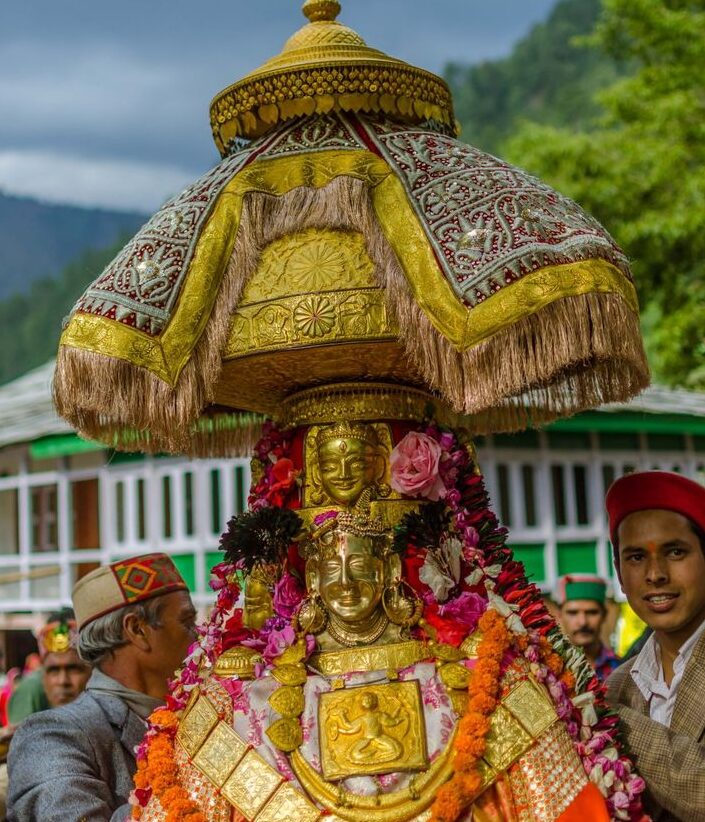
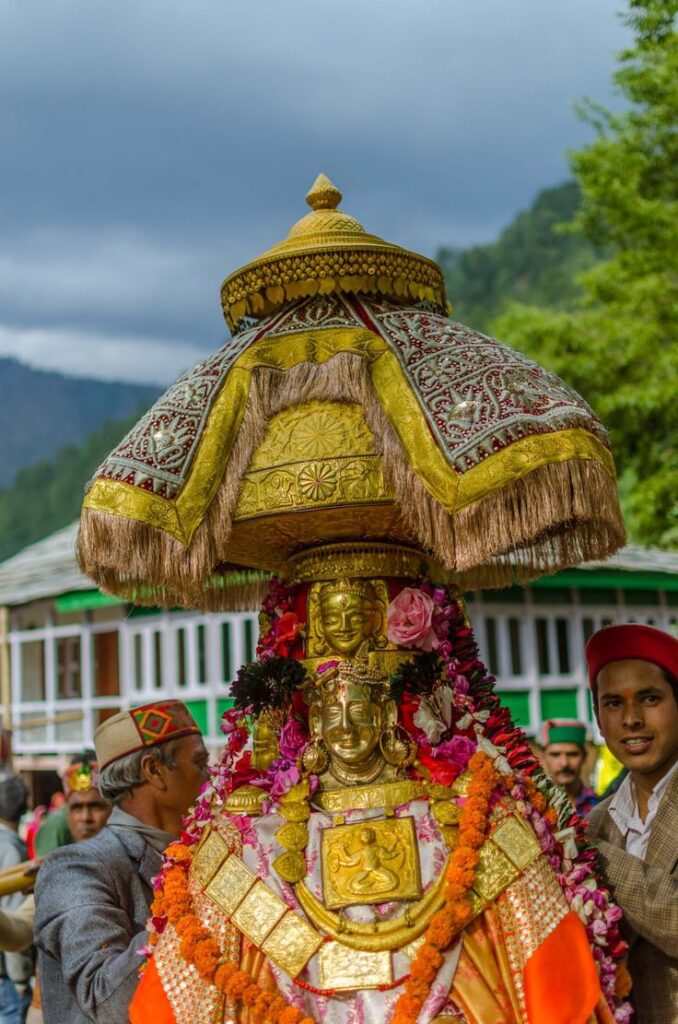
- Is represented during festivals through palanquins (palkis)
- Communicates through an oracle (Gur or Pujari)
No major festival begins without the Devta’s consent.
2. Festivals as Divine Assemblies
festivals-of-himachal-pradesh
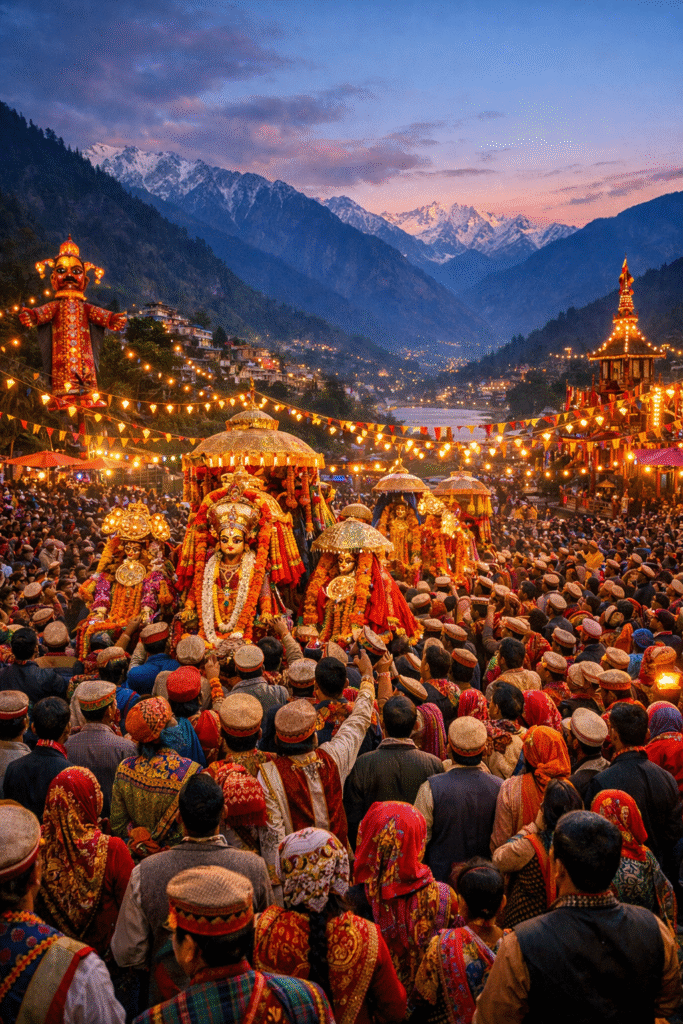
Major festivals like Kullu Dussehra and Mandi Shivratri are famous for:
- Gathering hundreds of deities in one place
- Symbolic meetings of gods
- Ritual discussions believed to guide communities
These festivals function like spiritual parliaments of Himachal.Blog
3. Local Customs and Ritual PracticesContact Us
Every festival follows traditions unique to its region:
- Mask dances in Kullu
- Fire worship in tribal areas
- Buddhist rituals in Lahaul-Spiti
- festivals-of-himachal-pradesh
These customs reflect:
- Ancient tribal beliefs
- Hindu and Buddhist coexistence
- Adaptation to local environments
4. Moral and Social Regulationhttps://www.tripoto.com/himachal-pradesh/trips/21-festivals-of-himachal-pradesh-to-witness-diversity-of-the-state-3ad73ce9db3be015f
Devtas are believed to:
- Punish wrongdoing
- Protect the innocent
- Maintain balance between humans and nature
Festivals reinforce ethical behavior by reminding people that divine justice is always present.
Cultural Importance in Modern Times
Even today, despite modernization:
- Villagers migrate back home for festivals
- Traditions are preserved with pride
- Festivals attract cultural tourism
For Himachalis, celebrating festivals is a way of saying:
“We remember who we are and where we come from.”
Cultural & Religious Significance of Himachali Festivals
The festivals of Himachal Pradesh are far more than colorful celebrations or religious holidays. They form the cultural backbone of Himachali society, reflecting how faith, nature, and community life are deeply interconnected. In the mountainous terrain where life has always depended on natural balance and collective effort, festivals act as spiritual anchors and social institutions.
Every Himachali festival carries layers of meaning—religious devotion, agricultural gratitude, cultural preservation, and social harmony. These celebrations sustain traditions that have survived for centuries despite changing times.
Devta-Centric Belief System
festivals-of-himachal-pradesh
At the heart of Himachali festivals lies the Devta-centric belief system, a unique spiritual structure where local deities govern the moral, social, and cultural life of communities.
Living Presence of Deities
Unlike abstract worship in many urban settings, Himachali deities are believed to be living, conscious forces. Each village or group of villages is protected by a Kul Devta or Gram Devta, whose will is central to all important decisions.
Festivals are organized only after:
- Seeking the deity’s permission
- Fixing dates according to divine guidance
- Performing ritual invitations to the Devta
During festivals, the deity is carried in a decorated palanquin (palki), symbolizing their physical presence among devotees.
Divine Authority in Festivals
In major festivals like Kullu Dussehra and Mandi Shivratri, hundreds of deities assemble in one place. This gathering is believed to be a divine council, where gods interact, resolve disputes, and bless communities.
The Devta-centric system reinforces:
- Faith in divine justice
- Respect for tradition
- Collective obedience to spiritual law
Thus, festivals become sacred platforms where human and divine worlds meet.
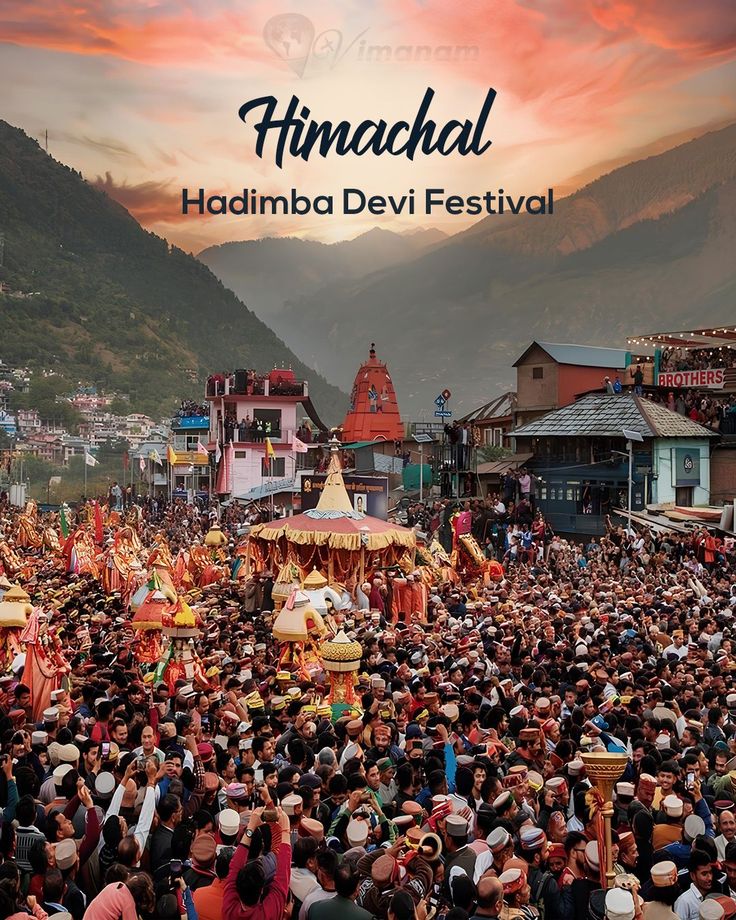
Community Bonding and Social Unity
In the challenging geography of Himachal Pradesh, survival historically depended on cooperation and mutual trust. Festivals evolved as powerful tools to strengthen community bonds.
Collective Participation
Every festival involves:
- Shared responsibilities
- Community cooking and feasts
- Group prayers and processions
Social differences dissolve during festivals—everyone eats together, dances together, and celebrates together.
Strengthening Inter-Village Relations
Many festivals invite neighboring villages and their deities, creating:
- Inter-village friendships
- Cultural exchange
- Shared spiritual identity
This tradition helps maintain peace and cooperation across regions.
Festivals as Social Equalizers
During festival days:
- Caste barriers are softened
- Gender roles become more inclusive
- Elders and youth interact closely
Festivals serve as social reset buttons, restoring harmony within communities.
Agricultural Calendar and Seasonal Cycles
The agricultural roots of Himachali festivals reflect the deep connection between humans and nature.
Festivals Aligned with Farming Life
Most festivals coincide with:
- Sowing season
- Harvest time
- Seasonal transitions (winter to spring, monsoon to autumn)
Examples include:
- Lohri – End of harsh winter
- Baisakhi – Harvest celebration
- Minjar Fair – Gratitude for maize crops
- Phulaich – Flowering season in high-altitude regions
These festivals express gratitude to both nature and deities for agricultural success.
Respect for Natural Forces
In hill agriculture, weather can determine survival. Festivals acknowledge:
- Snow, rain, sunlight, and soil as sacred
- Nature as a divine gift rather than a resource
Through rituals, people seek balance between human needs and natural limits.
Oral Traditions, Folk Songs, and Ritual Practices
Himachali festivals are living museums of oral heritage, preserving knowledge that predates written history.
festivals-
of-himachal-pradesh
Folk Songs as Historical Records
Festival songs narrate:
- Stories of gods and heroes
- Migration and settlement legends
- Moral lessons and social values
These songs are passed orally from elders to younger generations.
Folk Dances and Ritual Performances
festivals-of-himachal-pradesh
Traditional dances like:
- Nati
- Chham (Buddhist mask dance)
- Kayang
are not merely entertainment. They are ritualistic expressions believed to:
- Please deities
- Drive away negative forces
- Bring prosperity and harmony
Rituals as Cultural Identity
Every ritual—lighting lamps, offering flowers, beating drums—carries symbolic meaning tied to local beliefs. These rituals preserve:
- Tribal heritage
- Hindu-Buddhist coexistence
- Regional diversity
A Living Cultural Legacy
In a rapidly modernizing world, Himachali festivals continue to:
- Preserve indigenous knowledge
- Strengthen spiritual faith
- Maintain cultural continuity
They remind people that culture is not something displayed in museums—it is lived, celebrated, and passed on.
Classification of Festivals in Himachal Pradesh
The festivals of Himachal Pradesh are extremely diverse due to the state’s varied geography, religious beliefs, and cultural practices. From snowbound tribal valleys to fertile mid-hill regions and bustling towns, each area celebrates festivals in its own distinctive way. To understand this diversity clearly, Himachali festivals can be broadly classified into five major categories. Each category reflects a specific aspect of life—faith, nature, tribe, economy, and modern identity.

Religious Festivals
Religious festivals form the core of Himachali culture. These festivals are deeply rooted in devotion to gods and goddesses, especially local deities known as Devtas.
Most religious festivals revolve around:
- Worship of village and regional deities
- Temple rituals and processions
- Divine assemblies of gods
Key Features
- Deities are carried in decorated palanquins (palkis)
- Rituals are conducted by priests and oracles (Gur)
- Festivals often last several days
Major Religious Festivals
- Kullu Dussehra – Celebration of Lord Raghunath with participation of hundreds of local deities
- Mandi Shivratri – Dedicated to Lord Shiva, featuring the gathering of gods from across Himachal
- Navratri – Worship of Goddess Durga in Shakti Peeths
- Janmashtami – Celebrating the birth of Lord Krishna
Religious festivals reinforce the belief that divine power actively guides human life in Himachal Pradesh.
Seasonal & Agricultural Festivals
Seasonal and agricultural festivals are closely connected to nature, farming cycles, and climatic changes. In a hill state where agriculture depends heavily on weather conditions, these festivals are expressions of gratitude and hope.
Agricultural Significance
These festivals mark:
- Sowing of crops
- Harvest seasons
- Seasonal transitions like winter to spring
Important Seasonal Festivals
- Lohri – Celebrated in January to mark the end of winter
- Baisakhi – Harvest festival celebrated in April
- Minjar Fair – Associated with maize crops in Chamba
- Phulaich Festival – Celebrated in Kinnaur during flowering season
Through these festivals, people seek blessings for:
- Good rainfall
- Fertile land
- Protection from natural disasters
Tribal Festivals
festivals-of-himachal-pradesh

Tribal festivals represent the ancient and indigenous culture of Himachal Pradesh, especially in regions like Lahaul, Spiti, and Kinnaur. These festivals are influenced by Buddhist traditions, animistic beliefs, and early Himalayan customs.
Characteristics of Tribal Festivals
- Strong connection with nature and ancestral spirits
- Use of fire, masks, and symbolic rituals
- Limited influence of mainstream Hindu practices
Prominent Tribal Festivals
- Losar – Tibetan New Year celebrated in Lahaul-Spiti
- Halda Festival – Fire worship festival seeking prosperity
- Gochi Festival – Celebrates the birth of a male child
- Fulaich (Ukyang) – Honors ancestors in Kinnaur
Tribal festivals preserve some of the oldest cultural practices in the Himalayas.
Fairs (Melās) of Himachal
Fairs, locally known as Melās, are a vibrant combination of religion, trade, and entertainment. They have been an essential part of Himachali life for centuries.
Cultural and Economic Role
- Platforms for trade and exchange
- Opportunities for social interaction
- Celebration of local arts and crafts
Famous Melās of Himachal
festivals of himachal pradesh
festivals of himachal pradesh
festivals of himachal pradesh
festivals of himachal pradesh
festivals of himachal pradesh
festivals of himachal pradesh
festivals of himachal pradesh
Festivals of Himachal Pradesh are a reflection of the region’s diverse cultural heritage, blending ancient traditions with contemporary practices. Among these, tribal festivals play a crucial role in maintaining the rich tapestry of local customs, particularly in the more remote areas such as Lahaul, Spiti, and Kinnaur. The vibrant Melās, or fairs, serve as significant cultural and economic hubs, fostering community engagement through religious observance, trade, and entertainment. Collectively, these celebrations underscore the profound connection between the people of Himachal Pradesh and their sacred landscape.
They have been an essential part of Himachali life for centuries. Festivals of Himachal Pradesh showcase the region’s spiritual essence and communal harmony, inviting both locals and visitors to partake in the joyous celebrations. Each festival is marked by unique rituals, traditional music, and dance, creating a lively atmosphere that reflects the warmth of the Himachali people. Events such as the Kullu Dussehra and the Maha Shivratri festival highlight the state’s devotion and reverence for its deities, while also promoting cultural exchange. As you explore the festivals of Himachal Pradesh, you will gain a deeper appreciation for the intricate relationship between its inhabitants and their breathtaking natural surroundings.
- Lavi Fair (Rampur Bushahr) – Historic trade fair with Tibetan traders
- Nalwari Fair (Bilaspur) – Cattle and cultural fair
- Renuka Fair (Sirmaur) – Dedicated to Goddess Renuka
- Minjar Fair (Chamba) – Blend of devotion and celebration
Melās reflect the economic and social heartbeat of Himachal Pradesh.
National & Modern Festivals
Alongside traditional festivals, Himachal Pradesh also celebrates national and modern festivals, reflecting its integration with the wider Indian identity.
Commonly Celebrated Festivals
- Diwali – Festival of lights
- Holi – Festival of colors
- Independence Day & Republic Day
- Christmas (in urban areas and mission schools)
Regional Flavor
Even these festivals are celebrated with a Himachali touch:
- Local food
- Folk music
- Community gatherings
These festivals show how Himachal maintains a balance between tradition and modernity.
Conclusion of Classification
The classification of festivals in Himachal Pradesh reveals a society that:
- Honors divine forces
- Respects nature
- Preserves tribal roots
- Encourages social harmony
- Embraces national identity
Together, these festivals form a rich cultural mosaic, making Himachal Pradesh one of India’s most vibrant cultural landscapes.