No products in the cart.
Food of Himachal Pradesh: A Complete Guide to Traditional Pahadi Cuisine
Food of Himachal Pradesh: A Complete Guide to Traditional Pahadi cuisine
Introduction: Taste of the Mountains
The food of Himachal Pradesh is as pure and soulful as its snow‑clad mountains. Rooted deeply in geography, climate, agriculture, and spiritual traditions, Himachali cuisine reflects a lifestyle that values simplicity, nourishment, and community. Unlike spicy or oil‑heavy cuisines, Himachal food is mild yet flavorful, designed to provide warmth and energy in cold mountain conditions.
From ceremonial feasts like Dham to everyday comfort foods like Siddu and Madra, the cuisine of Himachal Pradesh is a rich blend of tradition, seasonal ingredients, and cultural wisdom passed down through generations. This blog explores the traditional foods of Himachal Pradesh, their cultural significance, regional variations, and why this mountain cuisine deserves global recognition.
Understanding Himachali Cuisine
Himachali food is shaped by:
- Cold mountainous climate
- Limited availability of ingredients
- Strong influence of temples and rituals
- Seasonal farming and forest produce
The cuisine focuses on lentils, grains, curd, local vegetables, ghee, and mild spices. Garlic and onion are often avoided in temple food, reflecting spiritual beliefs.
Food in Himachal is not just about taste—it represents hospitality, devotion, and collective living.
Dham: The Sacred Feast of Himachal Pradesh
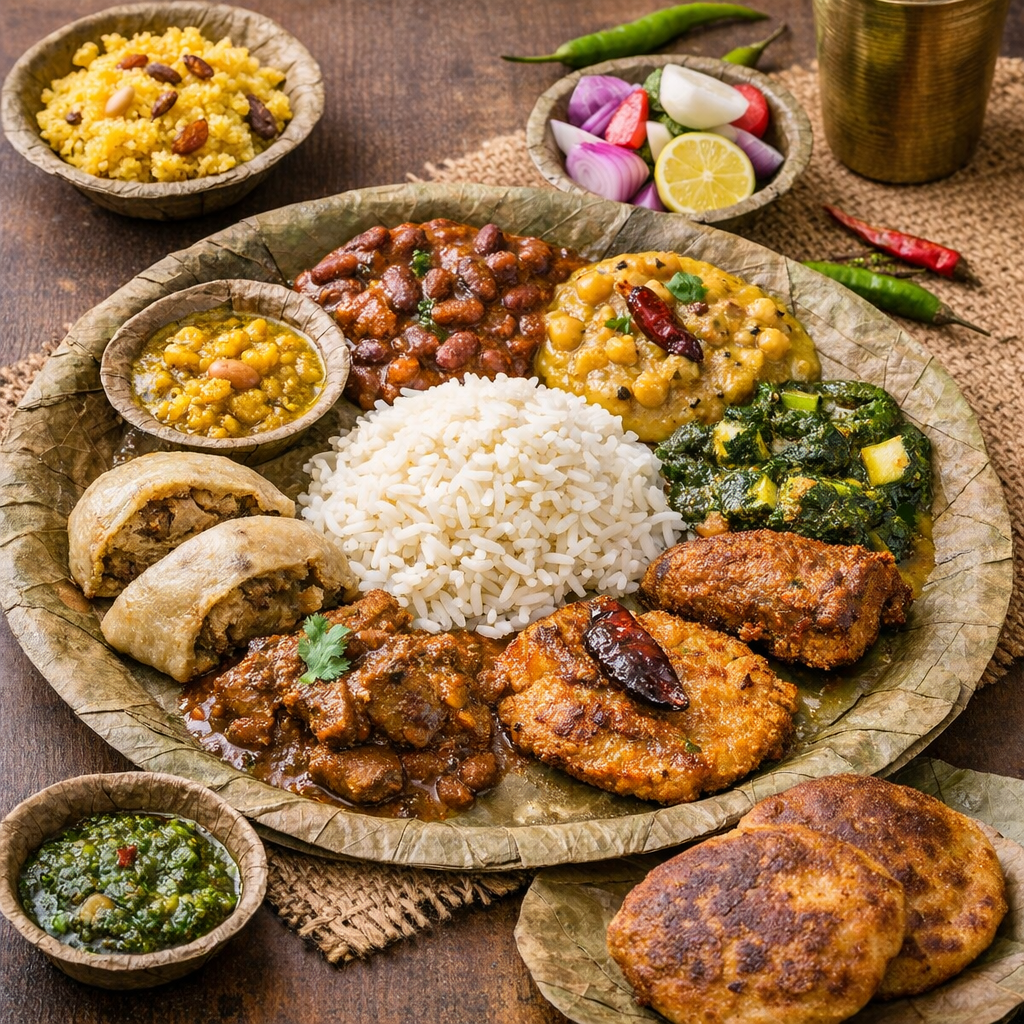
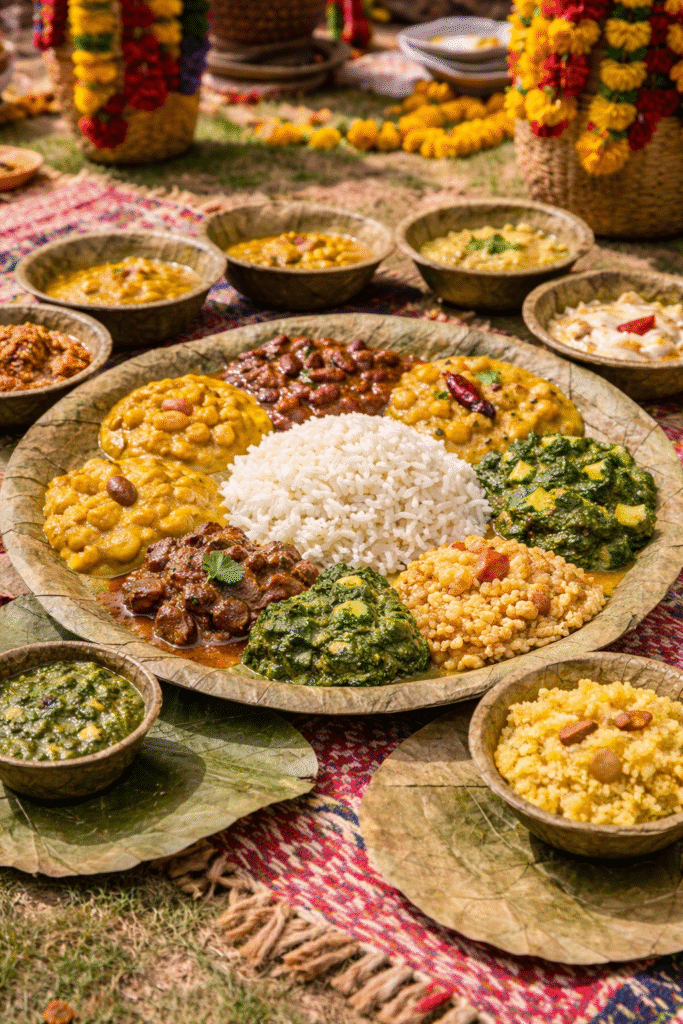
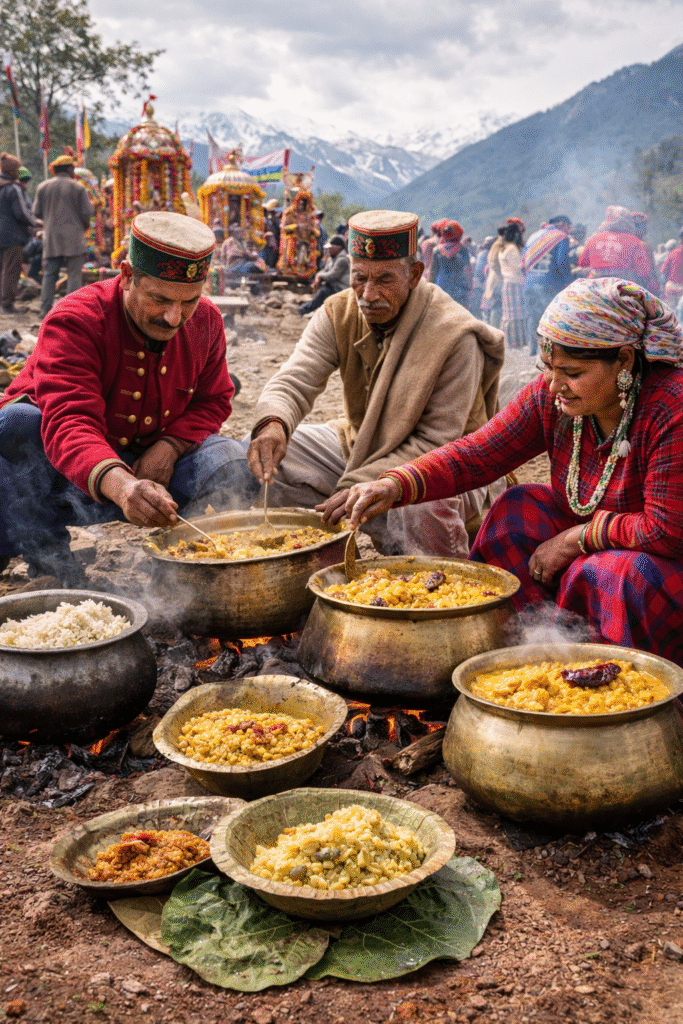
Dham is the most iconic traditional food of Himachal Pradesh. It is a ritualistic meal prepared during weddings, festivals, and religious ceremonies.
Key Features of Dham
- Cooked by hereditary cooks called Botis
- Entirely vegetarian
- Served on leaf plates while sitting on the floor
- Symbol of equality and community bonding
Typical Dham Menu
- Rice
- Chana Madra
- Rajma or Mash Dal
- Kadhi
- Sweet rice (Meetha Bhat)
Each region has its own variation of Dham, but its spiritual essence remains the same.
Food of Himachal Pradesh: A Complete Guide to Traditional Pahadi Cuisine
Chana Madra: Pride of Himachali Cuisine
Chana Madra is one of the most famous dishes of Himachal Pradesh, especially from the Kangra region. Cooked with curd, chickpeas, and mild spices, this dish reflects the subtle flavors of Pahadi food.
It is traditionally prepared during festivals and family gatherings and is a core component of Dham.
Siddu: The Winter Comfort Food
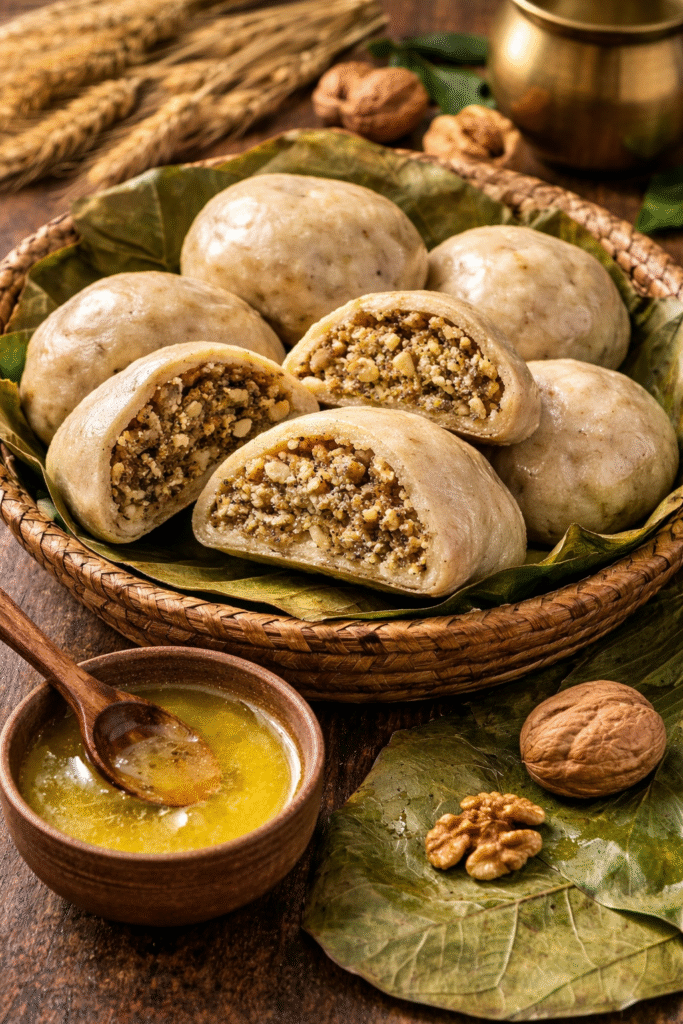
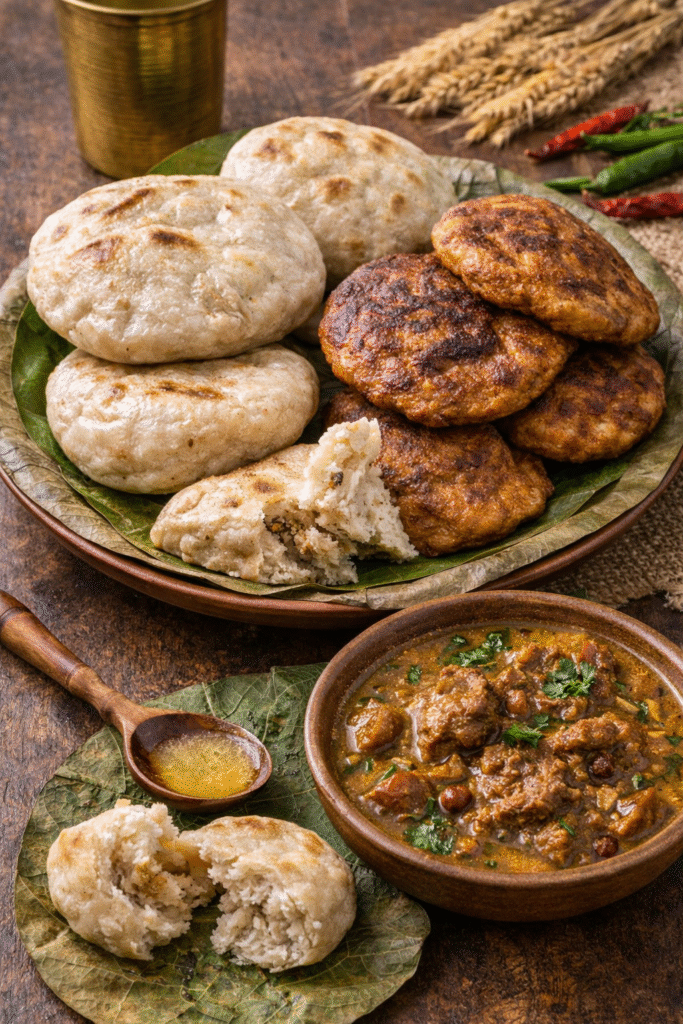
Siddu is a traditional steamed bread popular in Shimla, Kullu, and Mandi regions. Made from wheat flour and yeast, Siddu is often stuffed with poppy seeds or walnuts.
It is usually eaten with:
- Ghee
- Dal
- Green chutney
Siddu is especially popular during winters as it provides warmth and energy.
Food of Himachal Pradesh: A Complete Guide to Traditional Pahadi Cuisine
Babru: Himachal’s Version of Kachori
Babru resembles a stuffed kachori but is uniquely Himachali in taste. Stuffed with black gram paste and shallow‑fried, Babru is usually served with tamarind chutney or Madra.
It is a popular breakfast item in many parts of Himachal Pradesh.
Tudkiya Bhath: Rice with Mountain Flavours
Tudkiya Bhath is a spicy rice dish cooked with lentils, potatoes, garlic, and local spices. It is commonly eaten with ghee and curd.
This dish represents everyday home food in rural Himachal.
Aktori: A Rare Tribal Dish
Aktori is a festive pancake‑like dish from the Lahaul‑Spiti region. Made from buckwheat leaves or flour, Aktori reflects the tribal food culture of cold desert regions.
Photo Suggestion 4
Alt Text: Traditional Aktori dish from Lahaul Spiti
Chha Gosht: Traditional Non‑Vegetarian Delight
Though Himachal food is largely vegetarian, some regions enjoy Chha Gosht, a slow‑cooked lamb dish prepared with curd and gram flour.
It is mildly spiced and commonly prepared during special occasions.
Kullu Trout: Mountain River Special
Trout fish from the Beas and other rivers is a delicacy in Himachal Pradesh. Lightly spiced and grilled or fried, it is especially popular among tourists.
Local Breads of Himachal Pradesh
Apart from Siddu, Himachal has several traditional breads:
- Chilru – Flatbread made from wheat or barley
- Bhaturu – Soft fermented bread
These breads are usually served with dal or vegetables.
Food of Himachal Pradesh: A Complete Guide to Traditional Pahadi Cuisine
Traditional Sweets of Himachal Pradesh
Himachali sweets are simple yet deeply satisfying:
Mittha
Sweet rice prepared with dry fruits, usually served at the end of Dham.
Babru Sweet Version
Sweet‑stuffed Babru prepared during festivals.
Chha Gosht with Sweet Notes
Some regions balance savory dishes with subtle sweetness.
Fermented & Seasonal Foods
Fermentation plays a key role in Himachali cuisine:
- Fermented dough for Siddu
- Pickles made from local vegetables
- Sun‑dried vegetables for winter use
Seasonal cooking ensures sustainability and nutrition.
Influence of Geography on Food
Different regions of Himachal Pradesh have distinct food habits:
- Kangra & Mandi: Curd‑based dishes
- Kullu & Shimla: Wheat and fermented foods
- Lahaul‑Spiti & Kinnaur: Buckwheat, barley, and meat
Food and Festivals in Himachal Pradesh
Food plays a central role during:
- Weddings
- Devta fairs
- Seasonal festivals
Cooking is often done collectively, reinforcing social unity
Food of Himachal Pradesh: A Complete Guide to Traditional Pahadi Cuisine
Spiritual Significance of Food
Many dishes are prepared without onion or garlic as offering to deities. Food is considered sacred and never wasted.
Modern Revival of Himachali Cuisine
With growing interest in organic and traditional food, Himachali cuisine is gaining popularity through:
- Heritage restaurants
- Food festivals
- Home‑style cooking blogs
This revival helps preserve culinary traditions.
Why Himachali Food Is Healthy
Himachali food is:
- Low in oil
- High in protein and fiber
- Made with natural ingredients
- Suitable for cold climates
It supports digestion and immunity.
Conclusion: A Culinary Heritage Worth Preserving
The food of Himachal Pradesh is not just nourishment—it is heritage on a plate. Every dish tells a story of climate, faith, and community. In a fast‑paced world, Himachali cuisine reminds us of the beauty of slow cooking, seasonal eating, and shared meals.
Preserving this culinary legacy is essential to keep the spirit of Devbhoomi alive for future generations.
SEO FAQs – Food of Himachal Pradesh
Q1. What is the famous food of Himachal Pradesh?
Dham, Chana Madra, Siddu, Babru, and Tudkiya Bhath are among the most famous.
Q2. Is Himachali food vegetarian?
Mostly yes, especially during festivals, though some regions consume meat.
Q3. What is special about Himachali cuisine?
Its simplicity, nutritional value, and cultural significance.
Q4. What is Dham in Himachal Pradesh?
A traditional festive meal cooked by hereditary cooks and served during ceremonies.
Food of Himachal Pradesh: A Complete Guide to Traditional Pahadi Cuisine
Himachali Food Description (Traditional Pahadi Cuisine)
Himachali food is a beautiful reflection of the Himalayan lifestyle, shaped by cold climate, mountainous terrain, and deep-rooted traditions. Known for its simplicity, nutrition, and earthy flavors, the cuisine of Himachal Pradesh uses locally grown grains, pulses, vegetables, dairy products, and aromatic spices. Traditional Himachali meals are slow-cooked and prepared with minimal oil, making them both wholesome and flavorful.
One of the most iconic elements of Himachali cuisine is Himachali Dham, a festive meal served during weddings, religious ceremonies, and village fairs. Prepared by traditional cooks known as Botis, Dham is served on leaf plates and includes dishes like Madra, Dhauli Dal, Rajma, Khatta, and sweet Meetha Bhaat. The entire meal represents community bonding and cultural pride.
Popular everyday dishes include Siddu, a steamed wheat bread stuffed or plain, often served with ghee; Babru, a black-gram stuffed fried bread; Chana Madra, Patande, and Aktori. Dairy products such as curd, buttermilk, and ghee play an important role, especially in gravies and festive foods.